Mouse plane and arc: matching the mouse height to the keyboard
A mouse that sits 4 cm higher than the keyboard makes your shoulder lift every time you leave the keys. In a small desk the mouse also ends up further from the body than the keyboard, which adds a second, sideways reach on top of the vertical one.
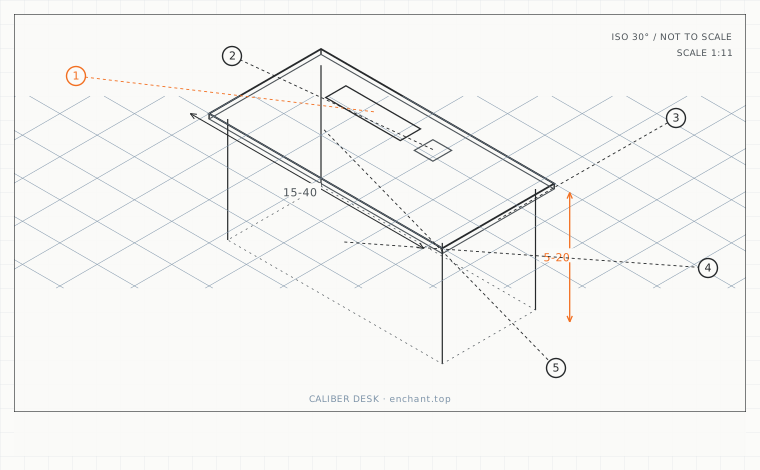
| Callout | Item | Ideal | Band | Why this band |
|---|---|---|---|---|
| 1 | Mouse-to-keyboard surface height difference | 0-1 | 0-2 cm | Every centimetre of difference is a shoulder lift repeated all day. |
| 2 | Gap from keyboard right edge to mouse centre | 8-15 | 5-20 cm | Keeps the arm inside its supported position while reaching for the pointer. |
| 3 | Pointer sweep radius | 20-30 | 15-40 cm | Under 15 cm the pointer becomes hard to control; over 40 cm the shoulder rotates. |
| 4 | Width recovered by dropping the numeric keypad | 10-12 | 8-15 cm | The single cheapest way to fix a cramped mouse area. |
| 5 | Mouse bridge drop from desktop | 8-12 | 6-15 cm | Matches a keyboard tray and removes the plane mismatch entirely. |
Same plane, same distance
Measure the top surface of the keyboard's home row and the top surface of the mouse. They should be within 1 cm of each other. If the mouse is on the desktop and the keyboard is on a tray, that gap is typically 8-12 cm, and crossing it a hundred times an hour is the reason one shoulder aches and the other does not.
Then measure the horizontal distance from the keyboard's right edge to the mouse's centre. Anything over about 15 cm means your arm leaves its supported position to reach the mouse. Bring the mouse in until the gap is 8-15 cm, and if that means a smaller keyboard, a smaller keyboard is the cheaper fix.
The arc: keep the sweep inside 30 cm
Put a mark at the centre of the mouse's comfortable travel and measure the radius you actually sweep. Most people sweep 40-60 cm across the desk because their pointer speed is set low. Raising the pointer speed by one notch typically halves the sweep within a day of adjustment.
Keep the sweep centred on the shoulder, not on the elbow. A sweep centred on the elbow moves the hand in an arc that pulls the shoulder into internal rotation at the extremes, which is what produces the ache on the outer side of the shoulder blade.
Small-space specifics
In a compact desk the mouse is often the item that falls off the edge first. Two changes recover most of the problem: a keyboard without a numeric keypad, which returns 10-12 cm of width, and a compact mouse whose length is under 10 cm, which reduces the depth it needs behind the wrist.
If you use a keyboard tray, fit a mouse bridge - a small platform that clamps to the tray at keyboard height. It costs less than replacing either device and removes the plane mismatch entirely.
Before you measure
- Measure the height of the keyboard home row and of the mouse top surface
- Bring the difference to 1 cm or less with a bridge or a shim
- Measure the gap from keyboard edge to mouse centre and target 8-15 cm
- Raise pointer speed until the sweep drops under 30 cm
- Confirm the sweep is centred on the shoulder, not the elbow
Once it is measured
- Mouse surface within 1 cm of the keyboard's home row height
- Horizontal gap from keyboard edge to mouse centre: 8-15 cm
- Keep the pointer sweep under 30 cm by raising pointer speed
- In small spaces, a keyboard tray mouse bridge beats a bigger desk
Three budget bands
Under $30 - a clamp-on mouse bridge for your existing keyboard tray, plus a software pointer-speed change that costs nothing.
$80-$180 - a compact tenkeyless keyboard under 36 cm wide, which returns 10-12 cm of mouse area immediately.
$300+ - a split keyboard with the pointer centred between the halves, so the sweep is symmetric and inside 20 cm.
Printable spec
Mouse within 1 cm of keyboard height - 8-15 cm from the keyboard edge to mouse centre - sweep under 30 cm - centred on the shoulder
Questions that come up
- Are vertical mice worth it?
- They change forearm rotation, which helps some people and is neutral for others. They do not fix height or reach, so set the plane and the distance first - the geometry is the bigger lever.
- My mouse pad is enormous. Does size matter?
- Only in that a large pad encourages a large sweep. If your sweep is over 40 cm, a smaller pad acts as a physical limit and will train you to raise pointer speed faster than any reminder.
Adjacent factors
- 2.05Desk height: seat height plus 20 to 25 cm, and why 75 cm fits almost nobody
- 2.05Keyboard height and tilt: the negative-angle trick that saves your wrists
- 2.05Desk depth: the working arc that decides where your monitors can go
- 2.05Under-desk clearance: the measurements that decide whether you can sit close
- 2.05Laptop riser math: how high the stand has to be, calculated not guessed
This page is measurement reference material, not medical advice. It describes dimensions that reduce load on a healthy adult at a desk; it does not diagnose, treat or prevent any condition. If you have an existing back, neck, wrist or circulation problem, or you are pregnant, take the numbers to a clinician or a qualified ergonomist rather than treating them as a prescription. All figures are adult anthropometric approximations - measure your own body before you spend money.